Tuesday, September 27, 2011


Making New Friends

The children began the year already familiar with each other but after a few weeks, they have begun to form nice relationships with each other. It warms a Morah's heart to see a young child bring over two toys to another child -one for his new friend and one for himself to initiate joining in play. Many times I will hear one of the children say "Thank You" to a new friend. There are days when a child enters the room in the morning and they are greeted by name with joyous cries from their classmates. The children move together around the room at times and other times enjoy exploring with one or two friends by their side.


Discovering our new Classroom


The children are discovering their new classroom. We enjoy using our hands and fingers during table activities such as coloring, working with playdough and making challah bread. The children engage in dramatic play in the house area and have fun playing with cars, and various building toys in the rug area. The children seem to travel around the room together as a group at times. When one child moves over to the play gym to climb and crawl through the tunnel and slide down the slide, they all go over and suddenly I hear them all laughing with each other.

Working Together!


The children are learning to work together by sharing space, crayons, toys and learning to wait for their turn on the slide or washing their hands at the sink. We are learning to use gentle hands and kind words when we play and work together.

Enjoying Every Day!


The children enjoy every day in the Young Toddlers Class. Shabbat is the favorite day of all. We make the challah bread, drink the Kiddush and have a Shabbat party. We love to sing Shabbat songs together and clap our hands when we sing Shabbot Shalom.


Getting Ready for the Holidays!
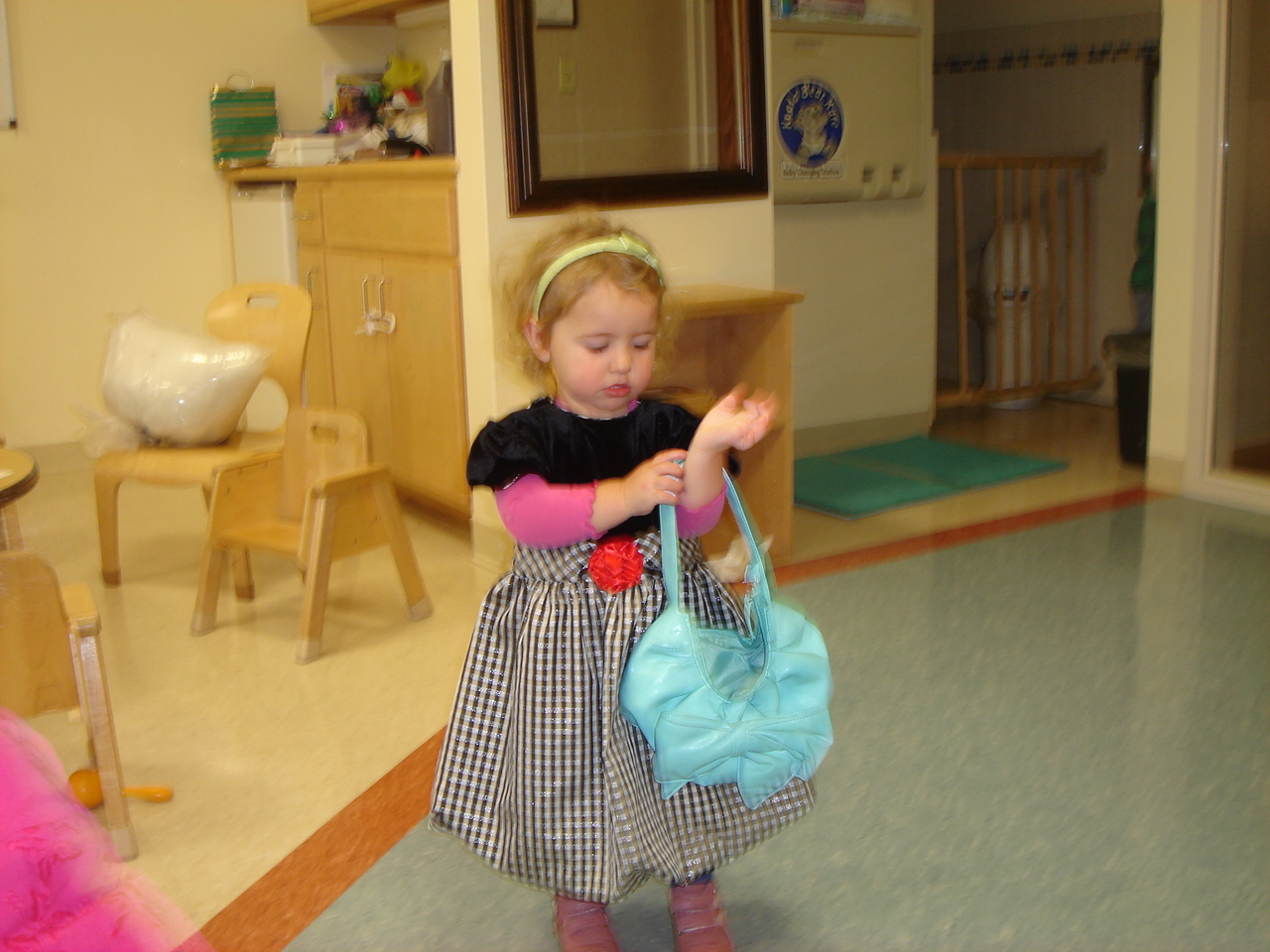


The children dress up and prepared the table for Rosh Hashanah. We dipped the apples in the honey and tasted how sweet. We sang a song for a Happy New Year.

Sunday, September 12, 2010

New Blog Address

With the split of the infants and young toddlers we will now have a separate blogs for each of the respective classes.
You can continue following our class at zimmeryoungtoddler.blogspot.com
All the best,
Morah Chaya

Tuesday, May 18, 2010

Our Special Torah

3322 years ago the Jewish people received the Torah at Mt. Sinai.
The Torah is our guidebook, teaching us how to live and behave properly.
Today, we celebrate the holiday of Shavuot to commemorate the receiving of the Torah. In shul (synagogue) the 10 Commandments are read – the very same words which were heard so many years ago at Mt. Sinai…


The children were very excited to hear that a holiday was coming – in which we would have challah, kiddush, and candles. Together with motions we sang:


Tune of London Bridge:


Shavuot is a holiday, a holiday, a holiday.
Shavuot is a holiday a special day.
On Shavuot we light the candles,
We light the candles, we light the candles
On Shavuot we light the candles for the holiday!
On Shavuot we drink some Kiddush……
On Shavuot we eat some Challah……

On Shavuot we remember something that happened long ago.
The Jewish people had just left Egypt and were on their way to Israel. On their way they heard some very exciting news – Hashem, who loves and cares for all the people, wanted to give them a present.
A present! That is so exciting.
They were going to get the first Torah!
Song:
Hashem gave us a present,
Do you know what it was?
He gave us the Torah to treasure and love!


The children’s prior knowledge of TORAH consisted of the stuffed Torah’s we had in our classroom. The children pointed to our stuffed Torah’s saying “Torah, Torah” and so we wanted to expand their definition of the word TORAH. Morah told the children, “Yes. That is our pretend Torahs which we love so much. But they are not real Torah’s. Would you like to go see a REAL Torah?”
Their response was full of excitement.

Together we went upstairs to the Aron Kodesh, the special closet where the Torah’s are kept. The children noted how big the Torah’s were. Some of us noticed that it had a crown with bells, and shiny things on it. Others noticed that the covering was soft. We all got to come up close to the Torah and give it a kiss.

Morah got a small version of the real Torah for us to open and see what’s inside. Wow, we can open a real Torah and see its many words.
“There’s words in the Torah.” “I roll it.”


With this background the children had the opportunity to make their own pretend Torahs. The children used their fine motor skills to bead jewels for the Torah and spread glitter glue over it to decorate.

Some Torah songs we sing are:
“Torah, Torah, Torah,
Torah, Torah, Torah,
Torah Tziva Lanu Moshe”

“Torah, Torah, my special Torah
Let me hold you tight.
Teach me, teach me, all the mitzvot
So I can do what’s right.
The Torah teaches us what to do
Torah, Torah, I love you.”


Come and hear the 10 Commandments read at Chabad tomorrow, Wednsday, at 6pm. Enjoy an Ice Cream Party and Dairy Buffet Dinner.

Happy Shavuot,
Morah Chaya and Morah Chaya


Tuesday, April 27, 2010

Spring and Planting

The seasons flow through the cycle bringing change to our environment. Now, we are experiencing the wonderful change and growth that happens in spring. One of the main ideas we want to focus on with the young toddlers is the sense of love and appreciation for the wonderful world in which we live in. Sometimes the leaves are orange. Sometimes they are green. Other times there are no leaves and it snows. There are just so many wonderful things to see and explore in our world!

Together we looked through our portfolio binders of photos of ourselves from the beginning of our year when it was fall time. We saw ourselves playing in colorful leaves that have fallen to the ground. Then we flipped a few pages further to see pictures of ourselves outside in the snow. Tree branches were bare and we were all bundled up in warm, cozy jackets. The children talked about what they saw in these photos. They pointed out the details of the environment. We were able to use this realization and knowledge to differentiate with this season and what is happening now in spring time.

To continue on our awareness of what springtime looks like, we went on a walk outdoors through the forest to take a closer look at what is happening now outdoors. The trees looked so alive! We found white flowers and green leaves growing on the trees. We felt wet, cold soil with our fingers. We took off our shoes and socks to run freely on the grass and feel the soft green grass with our toes. We watched as the water in the river quietly flowed. We smelled yellow flowers and listened to the sounds of birds chirping.

The children have learnt a new motion song to help us know what a little seed needs to help it grow.
Tune: “The eensy weensy spider”
“I plant a little seed inside the ground.
Out comes the yellow sun, big and round.
Down comes the raindrops, trickle, trickle, trickle.
Up comes the flowers, grow, grow, GROW!”


We then had the opportunity to plant flower seeds to grow into flowers. First we decorated our planters by using our fine motor muscles and dexterity we ripped colored tissue paper and crumbled them into small balls. We then chose a planting pot and glued the tissue paper to decorate.Next, we filled our pots with soil and put in a seed. The children were excited to know that, “Seeds hiding in there!” We are learning to care for our plants as each day we carefully pour in some water for the plants to drink, and watch as the soil soak it up. We have noticed that our plants have started to grow! We are excited for what is to come. We can't wait to see the flower come out.

Now that it is spring and we have been talking about seeds, we wanted to give the children more exposure to seeds and the many places they are found. It is surprising to us the many everyday places we encounter seeds. We therefore stop to point out the yummy food that we eat and where we could find its seeds. Some seeds are small, some fruit only have just a few seeds and others have many. It is exciting to see what we will find when we open a fruit or vegetable. As we opened the fruit or vegetable to reveal the seeds we placed them in a little container and labeled the seeds with a where they were found. This is a great opportunity for you to continue doing this at home as you prepare lunch or supper to help bring your child into the process and learn more about the things they encounter each day. Thank you to all our friends who brought in yummy fruits and vegetables to open and see what’s inside. It is so nice for the children to taste the many different healthy foods and enjoy it with their friends.

Our class is growing!
We would like to welcome our new classmates, Dana and Gabriel.
Everyone has been settling in very smoothly as the class has been very helpful in welcoming our new friends and helping them acclimate to their new class.

Congratulations to both the Demcsak family and Kiessling family on the birth of a baby girl. This is a big time for Dylan and Maggie as they moves into their new role as a big brother/sister. We wish the whole family much joy and happiness in raising your growing family.

Morah Chaya and Morah Chaya

Friday, April 9, 2010

Passover Holiday

Please click on the images to see our Passover holiday newsletter


Wednesday, March 24, 2010

WE CAN HELP EACH OTHER - the Holiday messages continue...

When learning the stories and practices of each holiday there are also important values we extract from the holiday and delve into in an age appropriate way.
Purim is a fun joyous holiday that can seem like just a great story of a king and an heroic queen and a holiday with really fun practices like having a holiday meal, dressing up and giving food gifts to our friends. But there is so much more we want our children to experience with the holidays.
Of course when teaching the holidays the children are involved in the joyous practices of holiday since happiness and celebration of the holiday is an important feeling the children should associate with holidays.

Personalizing the holidays message:
After completing the Purim story, we wanted to highlight one of the holiday’s messages: caring and helping one another. The children related to this messages as they were talking about how “Hashem help all the people. Queen Esther help the people and Rabbi Mordechai help the people.”

We know that it is important to teach children appropriate behavior from a young start to get them into good habits and practices. We want the children to know how important it is to care for others and want to help each other. So, we think, what is appropriate for a two year old in the area of relating to others? Toddlers are always and watching what others are doing and ready to mimic that behavior. When toddlers see how others treat each other or how others care for each other through their actions, they can be encouraged to do the same. While toddlers are not yet ready to emotionally relate to others, with guidance, good modeling and reinforcement they can be sensitive to see the needs of others and respond in an empathetic way.

In our classroom this plays out as,
1. We are encouraged to help others,
2. When someone helps us we acknowledge with an appropriate behavior- hug, smile or words of thank you!

TAKE A LOOK AT HOW WE ACT IN EMPATHETIC WAYS


Meir needed help opening his pretzels at snack time.
Dylan helped Meir to open his bag of pretzels.
Thank you Dylan - that was so helpful!


Miriam Sara was looking for her shoes.
Maggie found them and brought them to Miriam Sarah.
Thank you Maggie - that was so helpful!


Shayna noticed that her friend Mika was sad.
Shayna rubbed Mika's back to help her feel better.
Thank you Shayna - that was so caring!

To see more photos of times when we help each other, take a look on the wall outside our classroom.

Friday, March 5, 2010

Happy Purim!

We hope you had an enjoyable Purim holiday.
We would like to share with you how we explored the holiday of Purim in our class.

“There is a holiday coming up – it’s called Purim! Let’s tell the story of Purim story so we will know what Purim is all about…”
With that introduction, we started a puppet show telling of the story of long ago. We learned the names of the characters, described what they looked like, where they lived and what they did.
As the story slowly unfolded the children concretized that part of the story by decorating a picture of that scene. By now the children have completed a full Purim story book, each page decorated with a different art medium.

Enjoy reading the book to your child, or allow your child to read the story to you using the pictures as their guide. Ask your child questions about the characters, where they are, and what they are doing. With time and space to process and think about the question before they respond, you’ll be excited to see how much they can tell!

Here is the story of Purim in the children’s words:
“Mordechai. Esther. Hug Torah. Paint on house”
“Mordechai and Esther. Don’t have a crown yet. That Mordechai house.”

“Crown on Esther. Esther over here, in the big palace – not the house. King over here.”
“King and Queen in a palace. Wear a crown on their head, and a cape. Queen Esther over here”
“Haman hurt a people. They scared a Haman”
“People so sad. Not nice to the people”
“So happy! Thank you Hashem. No Haman. Haman far away!”
“People so happy. Hashem help them. Mordechai help them. Queen Esther help them and a King help them.”
“Gragger. Twirl – noise. Hamantash hot. In oven. Blow, blow, blow. Eat it. Megillah over there”
“A hamantash cookie. One, two, three. A gragger. Twirl it around and around. It goes faster and faster. Here’s a megillah”Putting vocabulary into context
In learning the story of Purim, the children were exposed to new vocabulary words including: king, queen, crown, palace, gragger (noise maker), hamentash cookie, costume, holiday and more. But what do these new words mean? When we say the words "palace," "king" and "queen," the child needs context in order to help them understand the meaning. What is different about a king / queen as opposed to boy/ girl?
We looked at pictures of what a king and queen look like and where they live. Additionally we provided a hands-on experience by visiting the pretend palace set up in the school lobby. We dressed up like kings and queens – in crowns, necklaces, dresses, and capes - to imagine ourselves in these roles.

We were able to assess the children’s understanding of these words through the comments they made as we read our Purim story book. While looking at the first page the children commented “Esther no crown. Esther house.” But then on the next page, they noticed, “Esther have a crown- Esther a queen!”

We develop our skills as we learn about the holiday practices
One of the ways we celebrate Purim is by dressing up in costumes. The children were given the opportunity to make their own crowns which they could wear for the holiday. As we made the crowns we spoke about the colors of our crowns and the colors of our friends' crowns. There were lots of different colors used – it is amazing to see that the children recognize and identify their crowns and the crowns of their friends based on the colors.

We have been using the symbols of Purim to play different skill-based games. This play gives su exposure to the symbols as we learn various developmental skills.

One game was matching cards based on size, big/small or big/medium/small.

Another game was counting the tips of the crowns. Morah helped the children to count each tip and be careful not to skip!

Following a recipe:
On Purim it we traditionally eat triangle-shaped hamantash cookies filled with jam. We wanted to make the cookies with the children - with them understanding how putting food ingredients together makes a new final product. So we created our own recipe book called "How to Make Hamantashen". Our book tells only one step / ingredient per page - keeping the children focused on their task. We "read" the ingredient, counted the amount we needed, and added it to the bowl. Then we turned to the next page of the book for the next ingredient, until we finished all the steps.

When we had added all the ingredients and mixed them, we were ready for the messy part! We rolled out the dough, used cookie cutters to cut out “circle” shapes, put jelly in the middle, and then folded them into “triangle” shapes. The best part was when the cookies had cooled down and we were ready to sample our hard work!
Here are some sample pages from our recipe book:


Shabbat Shalom,
Morah Chaya K, Morah Chaya G and Morah Batsheva